We Built a Food Market in America
We Built a Food Market in America
The Real Value Was in the People
For years, I thought the success of our San Diego markets could be measured by attendance numbers, vendor numbers and social media followers.
I was wrong.
The moments I remember most had nothing to do with any of those things.
This is a story about:
Building something from nothing
The people who quietly changed how I viewed business
Why the most important measures of success are often the hardest to measure
How a live NBC television interview and a David Beckham-inspired "quarter tuck" ended in an unexpected fashion review
Why a woman visiting her dying mother and a late-night text message from a Mexican immigrant became two of my proudest business moments
And the powerhouse behind the scenes who made it all work
Starting With an Idea
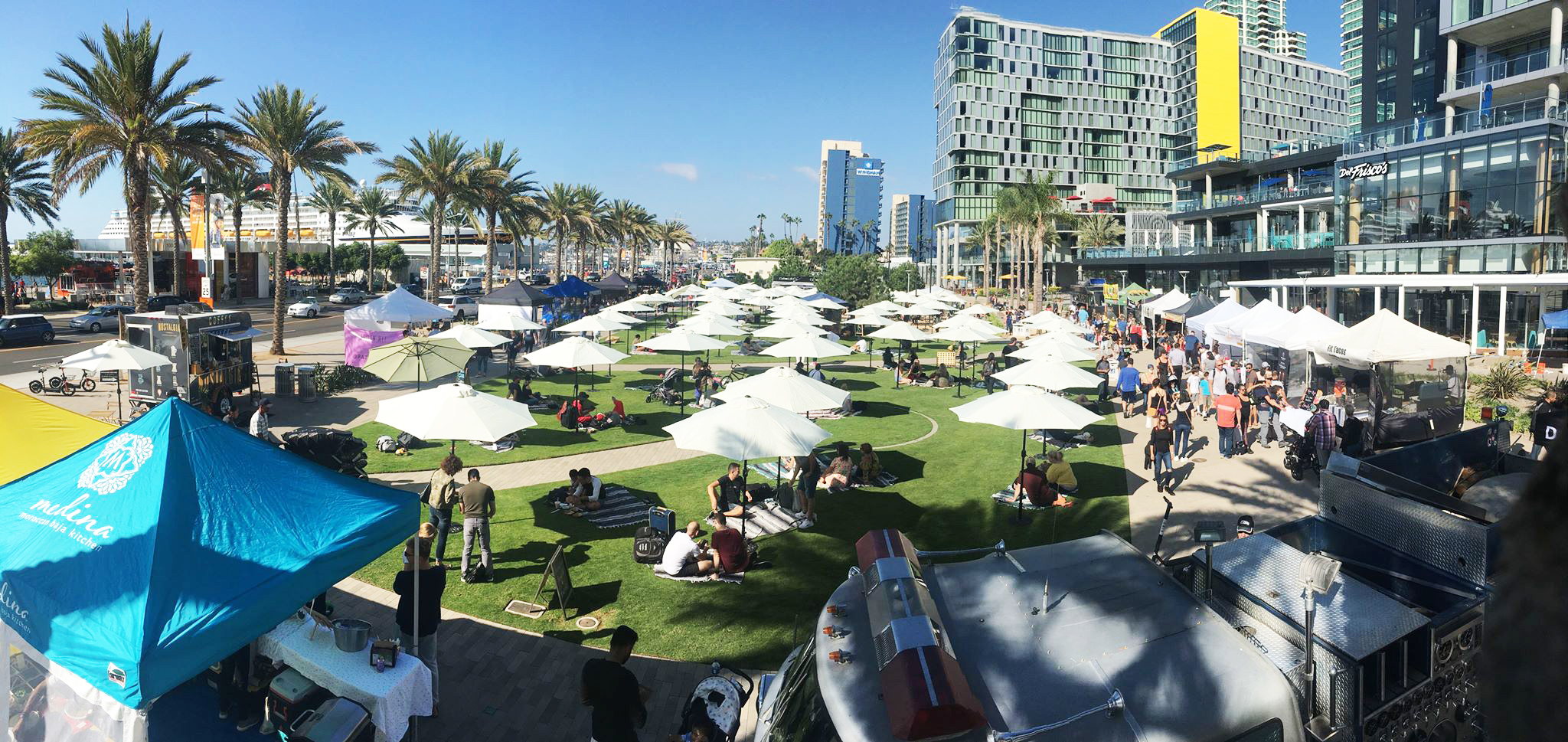
For seven years, Sara and I owned and operated the San Diego Food Markets on the waterfront in California.
Like most businesses, it started with an idea.
We found the location
Negotiated the agreement with the city
Built the brand
Recruited vendors
Created the systems
And then spent countless hours trying to turn the idea into something real.
Every weekend started with an empty space.
Then the food trucks arrived
The musicians arrived
The customers arrived
For a few hours, the place came alive.
Then it all disappeared again.
The following weekend we did it all over again.
At the beginning, we were focused on the same things most business owners focus on.
Attendance
Vendors
Marketing
Operations
Revenue
Growth
Making sure the whole thing survived another weekend.
At the time, we thought we were building a market.
What I didn't realise was that people were getting something completely different from it.
"Sometimes people value what you've built for reasons you never intended and could never predict."
The NBC Interview
One Saturday morning, NBC invited me into their studio for a live morning news segment about the markets.
At the time, it felt like a very big deal.
I'd never appeared on live television before.
And certainly not on a major American network.
I remember being nervous and excited as I drove into the studio.
The interview went well.
I survived.
Nobody asked me anything I couldn't answer.
And when I arrived back at the market later that morning, a customer approached me and said:
"Hey, I saw you on the news this morning. That's why I came."
I won't lie.
That felt pretty good.
Unfortunately, the feeling didn't last very long.
Later that day, one of our vendors called me over because they were having a disagreement with someone near their stall.
Part of my role was making sure everyone felt safe and helping de-escalate situations when they arose.
So I walked over and stepped in.
The person was animated.
Giving everyone a fairly hard time.
Then suddenly they stopped.
Took a step back.
Looked me up and down.
Then looked me up and down again.
Finally they pointed at me and said:
"What is this?"
They slowly ran their finger from my head to my shoes.
"Who dressed you this morning and decided this was a good look?"
What followed was a surprisingly detailed critique of my appearance.
The thing was, I knew exactly what they were talking about.
Earlier that morning, before appearing on NBC, I had decided to embrace what I called the "David Beckham quarter tuck."
One quarter of my shirt tucked into my jeans.
The other three quarters hanging out.
At the time, I thought it looked stylish.
Standing there being publicly ridiculed by a complete stranger, I began to reconsider.
To this day, it remains one of the funniest moments from my time running the markets.
Entrepreneurship has a wonderful way of keeping your ego under control.
"One minute you're on NBC. The next you're getting fashion advice from a complete stranger."
The Woman Visiting Her Dying Mother
A few weeks after we launched, a woman approached me.
She thanked me for creating the market.
I thanked her for coming.
Then she explained why she was there.
She was visiting San Diego because her mother was in hospital and nearing the end of her life.
The previous week had been incredibly difficult for her family.
Hospitals
Stress
Uncertainty
Emotionally exhausting days
That afternoon, they had come down to the waterfront and stumbled upon our market.
They sat together
Listened to music
Ate some food
Looked out over the water
She told me it was the first time all week they had been able to switch off.
I remember standing there not really knowing what to say.
Because I thought we were running a market.
She was talking about something completely different.
"I thought we were providing food and entertainment. She was talking about family, connection and peace."
The Vendor
About two weeks later, another moment stopped me in my tracks.
Late on a Sunday night, after the market had finished and everything had been packed away, I received a text message from one of our vendors.
She had immigrated from Mexico and was working hard to build a future for herself and her family.
The message was short, but I've never forgotten it.
"Andrew, as immigrants to America, we didn't know how far we could go until we met you."
I remember reading it several times.
Not because I felt I had done anything extraordinary.
But because once again, somebody was talking about something very different to what I thought we were providing.
I thought we were creating a market.
She was talking about opportunity
Confidence
Possibility
A belief in what might be achievable
Different person.
Different circumstances.
Same lesson.
Again, I realised people were experiencing the market very differently to how I saw it.
"The market wasn't just creating customers. It was helping people see new possibilities."
The Real Power Behind the Business
People often saw me as the face of the business.
I was the one talking to vendors
Building relationships
Meeting customers
Doing interviews
Bringing energy and personality to what we were creating
But behind the scenes, Sara was the powerhouse.
She always has been.
Our business partnership has worked because our strengths complement each other.
I tend to be the front person.
Sara is the person who makes it all work.
After our first two years in San Diego, we returned to Australia.
Most people assumed that would be the end of the markets.
It wasn't.
For the next five years, Sara ran the operation remotely from Australia.
Team management
Vendor bookings
Scheduling
Communications
Administration
Problem solving
Everything required to keep a business running on the other side of the Pacific Ocean.
To this day, I'm still not entirely sure how she pulled it off.
But she did.
And the markets continued to grow.
Eventually attracting more than 200,000 visitors each year and building a social media community of more than 35,000 followers.
Achievements we remain incredibly proud of.
"People saw the face of the business. Sara was the powerhouse behind it."
Knowing When It Was Time
Eventually, Sara and I made the decision to sell.
To continue growing the business, expanding into new locations and taking it to the next level, we needed to be in America.
And we knew we weren't going back.
That realisation made the decision surprisingly clear.
We were proud of what we had created.
Proud of the brand
Proud of the opportunities
Proud of the jobs
Proud of the experiences
Proud of the community
Selling was emotional.
We were excited about the future.
But we were also sad.
And if I'm honest, we missed it after it was gone.
"We were proud of what we built, but even prouder of what it became."
Final Thoughts
When people ask me about the San Diego Food Markets, they often focus on the numbers.
The social media following
The attendance
The growth
The television appearances
The negotiations
The business itself
But that's not what I remember first.
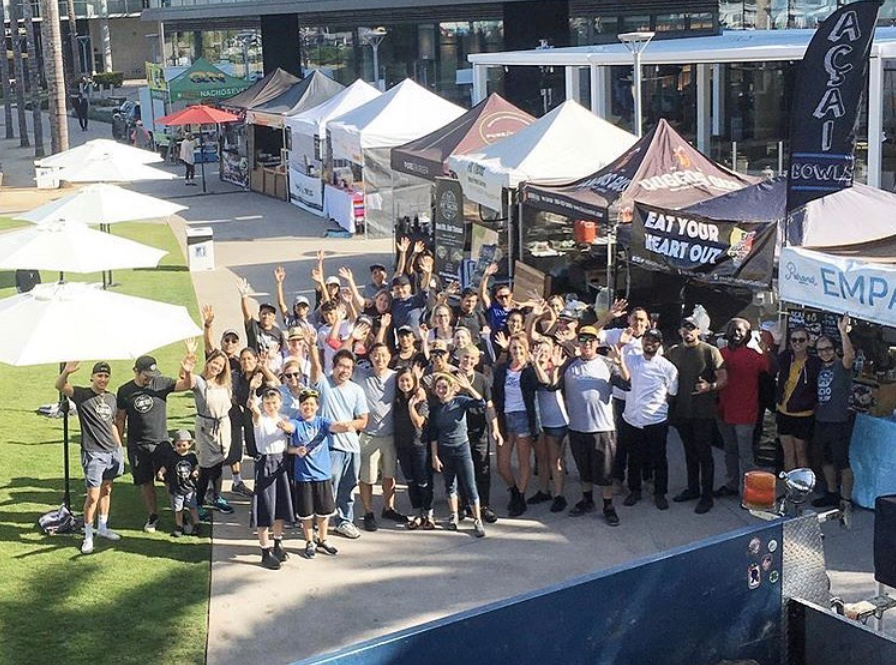
The first image that comes to mind is a photograph.
I had climbed halfway up a large palm tree before one of the markets to take a group photo.
Looking down, I could see vendors gathering below.
Business owners
Entrepreneurs
Friends
People who had taken a chance on an idea that Sara and I had created
Years later, that's what I remember most.
Not the market
Not the numbers
Not the contracts
The people.
The woman visiting her dying mother
The vendor building a future
The musicians
The customers
The relationships
The community
Sara and I thought we were building a food market.
In reality, we were creating something much harder to measure.
Opportunity
Connection
Community
Friendship
Memories
A place where people could pause, connect and sometimes find exactly what they needed.
Looking back now, that's what makes me most proud.
"The real value was never in the food. It was in the people."
Thinking About Building Something of Your Own?
The lessons from San Diego Food Markets - about entrepreneurship, leadership, resilience and building things that matter to people - sit at the heart of how we think about education at Connect Business Academy.
Our nationally recognised courses are designed for people who want to build real capability, not just collect a qualification.
Entrepreneurship
BSB40320 Certificate IV in Entrepreneurship and New Business
Leadership & Management
BSB50420 Diploma of Leadership and Management
BSB40520 Certificate IV in Leadership and Management
Business
BSB50120 Diploma of Business
BSB40120 Certificate IV in Business
Looking to accelerate your growth?
Double Diploma of Business + Leadership and Management
— Andrew Sisley
CEO & Head Trainer
Connect Business Academy