Do What You Say You Are Going To Do
Do What You Say You Are Going To Do
The Leadership Lesson that Started with a Box on a Shelf.
I learnt one of the most important leadership lessons of my career early in my management journey.
At the time, it seemed completely insignificant.
It wasn't.
It involved:
A box on a shelf
A Regional Manager
And a promise I forgot to keep
For the most part, I've tried to live by that lesson ever since.
Then, twenty years later, a city official in Detroit reminded me exactly why it matters.
Like many people, I didn't set out to become a leader.
I was good at my job, I got promoted, and suddenly I was responsible for people.
Nobody called it being an accidental manager at the time.
But that's exactly what I was.
And it turned out that leading people well required something my performance record alone couldn't give me.
Character.
More specifically, the kind of character that shows up in the small moments.
The moments nobody is watching.
Like a box on a shelf.
The lesson was simple:
Do what you say you are going to do.
The Box on the Shelf
Early in my career, I was working in retail management.
Progressing quickly
Confident in my ability
Genuinely caring about the people around me
One day, a staff member asked me for something.
Something small.
I can't remember exactly what it was, but it was something along the lines of getting a box down from the top shelf of the fixture cupboard.
Genuinely trivial
I said I'd sort it out
And then I forgot about it
Days passed, then my Regional Manager came in for a visit. At some point during the day, the staff member mentioned it to him, and the Regional Manager called me out on it.
I remember standing there thinking:
Really? This?
Out of all the sales targets
All the staffing challenges
All the operational issues
We're talking about a box on a shelf?
At the time, it felt completely insignificant. But it clearly wasn't insignificant to him.
Not because the box mattered
Because my word mattered
I walked away from that conversation slightly confused and slightly embarrassed.
But something about it stuck.
I just didn't realise how important that lesson would become.
Detroit and the Dream
Two decades later, Sara and I were living in America.
If you've read my San Diego story, you'll know a little about that chapter of our lives.
What many people don't know is that before San Diego, there was a project in Detroit that didn't quite go according to plan.
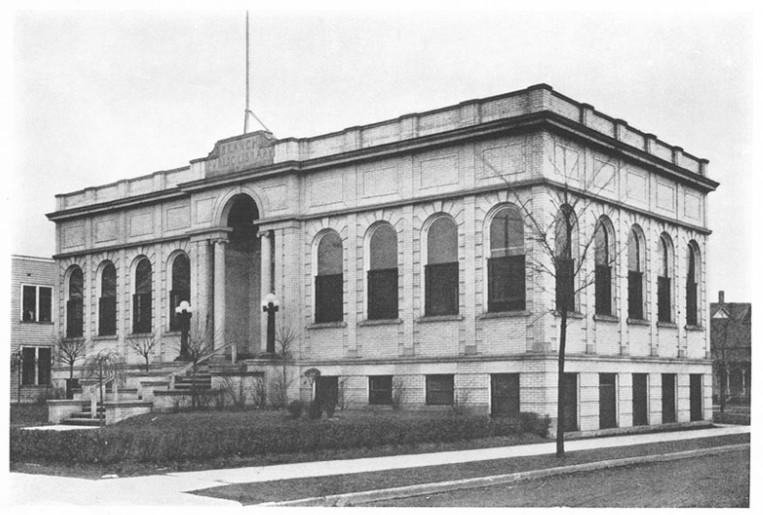
We discovered a beautiful hundred-year-old library building that had been damaged by fire. By damaged, I mean completely burnt out inside.
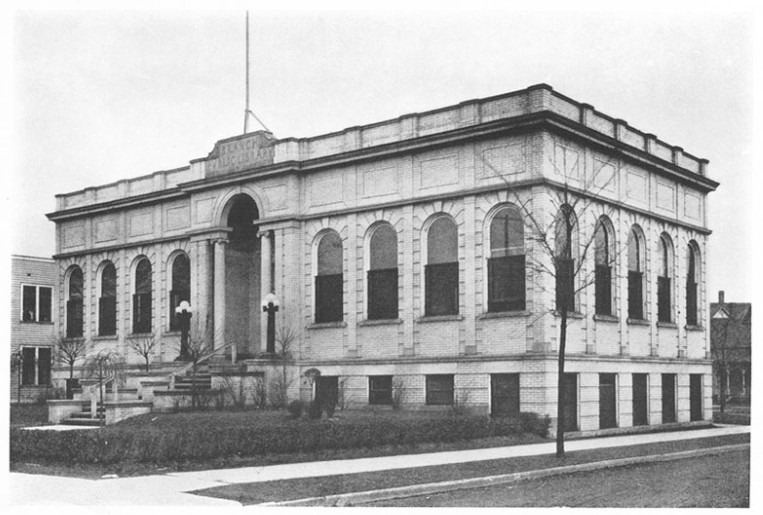
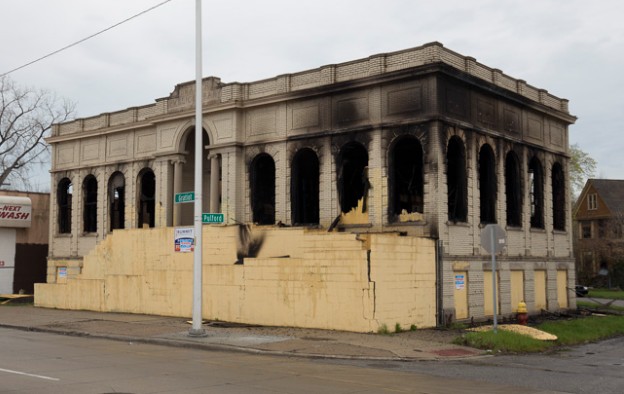
Most people saw an abandoned building, but I saw possibility:
The history
The architecture
The opportunity
It wasn't difficult to imagine what it could become.
I could already see people walking through it, gathering in it, bringing it back to life.
It wasn't just a building.
It was an opportunity to contribute something meaningful to a city that had already given us so much.
We put together a proposal and submitted a bid to the city to purchase it.
Our vision was ambitious. Not just to restore the building. But to create something valuable for the community around it.
To my delight, we won.
Then life happened. Circumstances changed. Plans evolved.
Without going into every detail, what eventually happened was this:
We cleaned the building up
Stabilised it
And sold it to another investor
Who partially restored it
Then sold it again
Until eventually it became an office
The building was saved from demolition, which was a good outcome.
But it wasn't the outcome we had originally proposed.
It wasn't what we said we were going to do.
And somewhere in the back of my mind, I knew that.
The Phone Call
Sometime later, another opportunity emerged in Detroit.
This one was even bigger.
Several acres of neglected land with extraordinary potential.
I could see exactly what it could become:
Markets
Food
Music
Community
Life
I put together an ambitious proposal. Produced a pitch video. Prepared the documentation. Submitted everything.
I genuinely believed we had a strong chance.
Then nothing ...
No response.
Days turned into weeks.
Eventually, I picked up the phone and called.
I was told that our submission was unsuccessful.
As I tried to plead our case and ask for reasons why, the person on the other end of the line listened politely.
Then she said 15 words I have never forgotten:
"You didn't do what you said you were going to do, did you Mr Sisley."
It wasn't a question; it was a statement.
And it stopped me completely.
I knew immediately that she wasn't talking about the land.
She was talking about trust.
The proposal sitting in front of her wasn't being assessed on its own merits.
Not on what I was promising to do next, but on what I had done previously.
And in that moment, I found myself thinking about the box on a shelf from years earlier.
A lesson I thought I understood.
People remember
Cities remember
Organisations remember
And sometimes opportunities are won or lost long before the decision is made.
She was right.
The interesting thing is that I hadn't forgotten the lesson from that retail store.
I'd spent years trying to live by it.
The challenge wasn't a lack of intent.
Plans had changed. Circumstances had evolved.
From my perspective, there were reasons for that.
From the city's perspective, there was simply a commitment that hadn't been fulfilled.
People don't judge us solely on our intentions.
They judge us on outcomes.
Good intentions matter.
But they don't replace follow-through.
We had won a pitch on the strength of a promise
And lost the next opportunity because we hadn't kept it
The project had changed; the outcome had changed; and from her perspective, that was all that mattered.
The city remembered.
And no amount of compelling new proposals was going to change what was already on the record.
What Happened Next
Looking back, it's probably a good thing we didn't get the land.
Not because the idea wasn't good.
But because we had somehow overlooked a fairly important detail.
Detroit spends what feels like half the year at minus 30 degrees and under 6 feet of snow.
Which, now that I think about it, may not be ideal conditions for an outdoor food market.
And that is how we came to be in San Diego.
As one door closed in Detroit (let's be honest it was slammed in my face), another was about to open on the other side of America.
A place where outdoor markets made considerably more sense.
And where the idea we had imagined for Detroit would eventually welcome hundreds of thousands of visitors each year.
The Thing About Trust
Following the box on the shelf reprimand, I became slightly obsessed with the idea:
Integrity
Follow-through
Keeping your word
Whatever phrase you prefer ... I like "do what you say you are going to do".
Not because I'm perfect at it. Far from it.
Because I've seen how much it matters.
Most people think trust is built in the big moments
I've come to believe it's built in the small ones
The major decisions
The difficult conversations
The defining leadership tests
They're important.
But trust is usually built somewhere else entirely:
In the follow-up you said you'd do
The phone call you said you'd make
The commitment you said you'd honour
The box on the shelf you said you'd get down
The things that seem insignificant at the time
Until they aren't
Every time we do what we say we're going to do, we make a small deposit into the trust account we hold with other people.
And every time we don't, we make a withdrawal.
That's true in leadership
It's true in business
It's true in relationships
And it's true whether the stakes involve a box in a cupboard or a multi-million-dollar development proposal.
What This Has To Do With Leadership
I've thought about that Regional Manager many times over the years. A person I truly admired.
At the time, I thought he was making a mountain out of a molehill.
Looking back now, I think he was teaching me one of the most important leadership lessons of my career.
Leadership isn't built on authority
Leadership is built on trust
Trust is built when our actions consistently match our words.
Trust is built every day:
In the commitments we keep
The conversations we have
The promises we honour
Every commitment is either a deposit or a withdrawal
The account balance matters more than most people realise
Because eventually, somewhere along the way, somebody is keeping score.
Not to catch you out. Not because they're waiting for you to fail.
But because trust, once broken, is difficult to rebuild.
The leaders who understand that tend to be the leaders people willingly follow.
Not because of their title.
Because of their word.
Do what you say you're going to do
It sounds simple
It changes everything
Thinking About Your Own Leadership Development?
One of the things this experience reinforced for me is that leadership capability isn't just about knowledge, strategy or technical expertise.
It's also about character.
The habits, behaviours and self-awareness that shape how we show up, build trust and lead others.
While expertise might earn opportunities, trust is often what determines what happens next.
At Connect Business Academy, we believe leadership is developed through a combination of experience, reflection and learning.
Not simply learning how to lead teams
But learning how to lead yourself
How to communicate clearly
How to build trust
How to follow through
And how to consistently align your actions with your intentions
Because leadership isn't built on authority.
It's built on trust.
And trust is built when we do what we say we're going to do.
Entrepreneurship
BSB40320 Certificate IV in Entrepreneurship and New Business
Leadership & Management
BSB50420 Diploma of Leadership and Management
BSB40520 Certificate IV in Leadership and Management
Business
BSB50120 Diploma of Business
BSB40120 Certificate IV in Business
Looking to accelerate your growth?
Double Diploma of Business + Leadership and Management
— Andrew Sisley
CEO & Head Trainer
Connect Business Academy
"Do what you say you're going to do. It sounds simple. It changes everything."
Andrew Sisley
CEO & Head Trainer
Connect Business Academy